If you have ever painted a wall in Nigeria only to notice the paint bubbling, cracking, flaking or peeling a few months later, you are not alone.
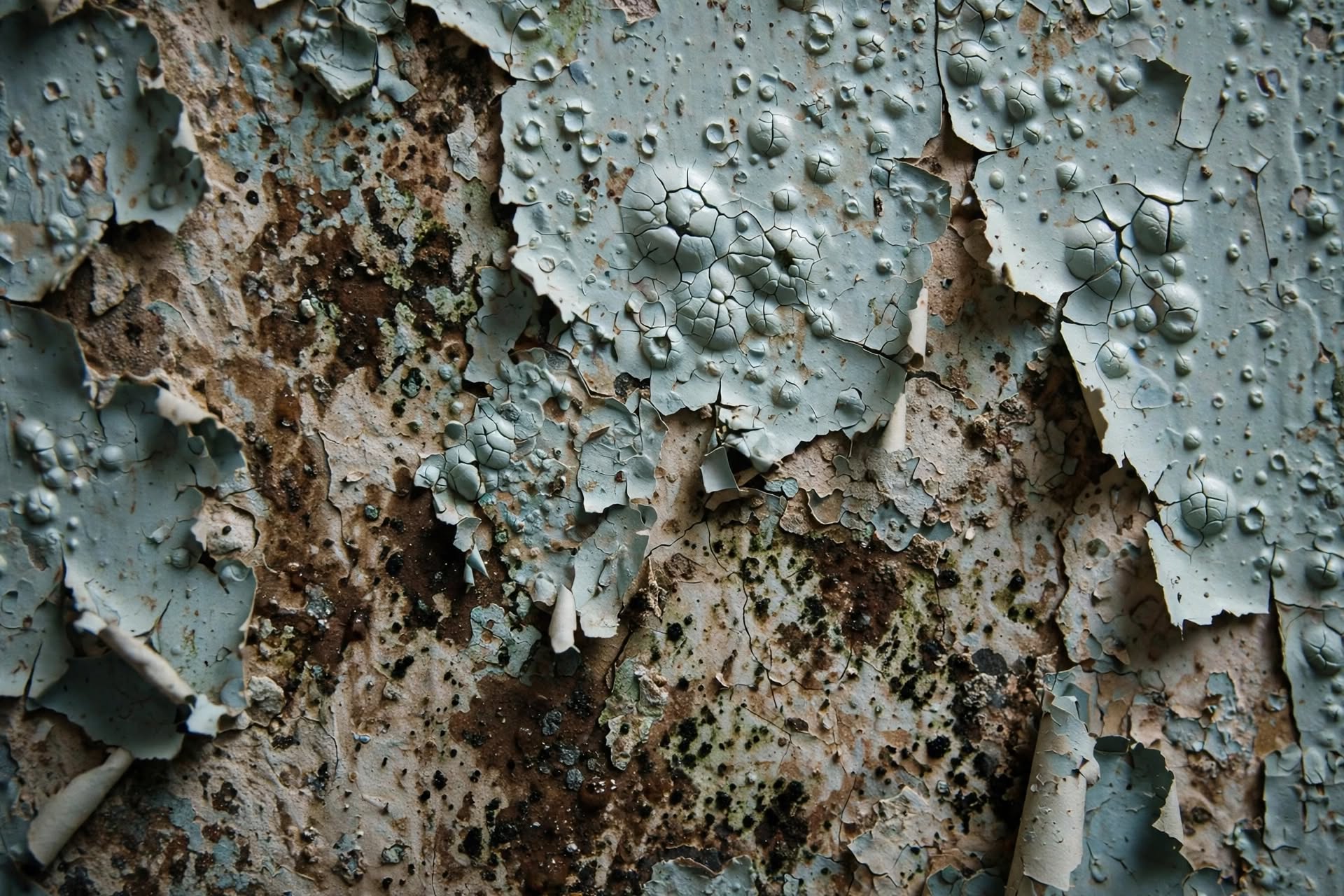
Wall paint peeling is a common problem in many Nigerian homes, offices, commercial buildings, schools, hotels and other properties. Sometimes, a freshly painted wall can begin to show signs of deterioration surprisingly quickly. The surface may start with small bubbles, then develop cracks, flaking patches or areas where the paint completely separates from the wall.
But why does this happen?
One major factor is Nigeria’s humid climate.
High humidity, moisture in walls, heavy rainfall, condensation, poor ventilation and inadequate surface preparation can all affect how well paint adheres to a wall. However, humidity is not always the only culprit. The type of paint used, the condition of the wall, the quality of the application and how the surface was prepared before painting can make a significant difference.
Understanding why wall paint peels is important because repainting without addressing the underlying problem can simply lead to the same issue happening again.
What Causes Wall Paint to Peel?
Paint peeling occurs when the coating loses its ability to properly adhere to the surface beneath it.
Under normal conditions, quality paint should form a stable coating over a properly prepared surface. But when moisture, heat, dirt, dust, weak plaster, poor preparation or incompatible coatings interfere with adhesion, the paint can begin to lift away from the wall.
Common causes of peeling wall paint include:
- Excess moisture in the wall
- High humidity
- Water leakage
- Rainwater penetration
- Poor wall preparation
- Painting on a damp surface
- Painting over dust or dirt
- Applying paint over a weak or chalky surface
- Poor-quality paint
- Applying incompatible coats
- Incorrect application techniques
- Lack of adequate drying time
- Poor ventilation
- Structural or plumbing problems
In Nigeria, several of these factors can occur at the same time.
For example, a wall may be exposed to moisture from rainfall while also having poor ventilation. If that wall is then painted before it has properly dried, the new paint may struggle to bond effectively to the surface.
This is why simply buying another bucket of paint and repainting the affected area may not solve the problem.
How Humidity Affects Wall Paint in Nigeria
Humidity refers to the amount of moisture present in the air.
Nigeria experiences humid conditions in many parts of the country, particularly in coastal and southern regions. Lagos and other areas with significant rainfall and moisture in the atmosphere can experience conditions that create additional challenges for painted surfaces.
When humidity is high, moisture can affect the painting process as well as the long-term performance of the coating.
1. Moisture can interfere with paint adhesion
For paint to perform properly, it needs a suitable surface to adhere to.
If a wall contains excessive moisture, the paint may not bond as effectively. As the moisture moves through the wall, it can put pressure on the coating and contribute to blistering, bubbling or peeling.
This is particularly important when painting newly plastered walls.
A wall that looks dry on the outside may still contain moisture beneath the surface. Painting too early can trap that moisture underneath the coating.
Over time, the moisture may try to escape, causing the paint film to weaken.
2. Humidity can slow drying
Paint needs sufficient time to dry and cure.
When the surrounding environment contains a lot of moisture, evaporation can take longer. This can affect the drying process and the final performance of the coating.
Applying another coat before the previous layer has adequately dried can compound the problem.
Instead of creating a strong, stable finish, the layers may remain vulnerable to adhesion problems.
3. Humidity can contribute to mould and mildew growth
Moisture and poor ventilation can create favourable conditions for mould and mildew.
This is especially relevant in bathrooms, kitchens, basements, poorly ventilated rooms and walls exposed to persistent dampness.
Mould and mildew can damage the appearance of painted walls and may also indicate that there is an underlying moisture problem that needs to be addressed.
4. Persistent moisture can damage the wall beneath the paint
Sometimes, what appears to be a paint problem is actually a wall problem.
If water is continuously entering the wall through cracks, leaking pipes, damaged roofing, poor waterproofing or rain penetration, repainting the surface without fixing the source of the moisture is unlikely to provide a lasting solution.
The paint may peel again because the underlying cause remains.
Why Does Paint Peel After Rainy Season?
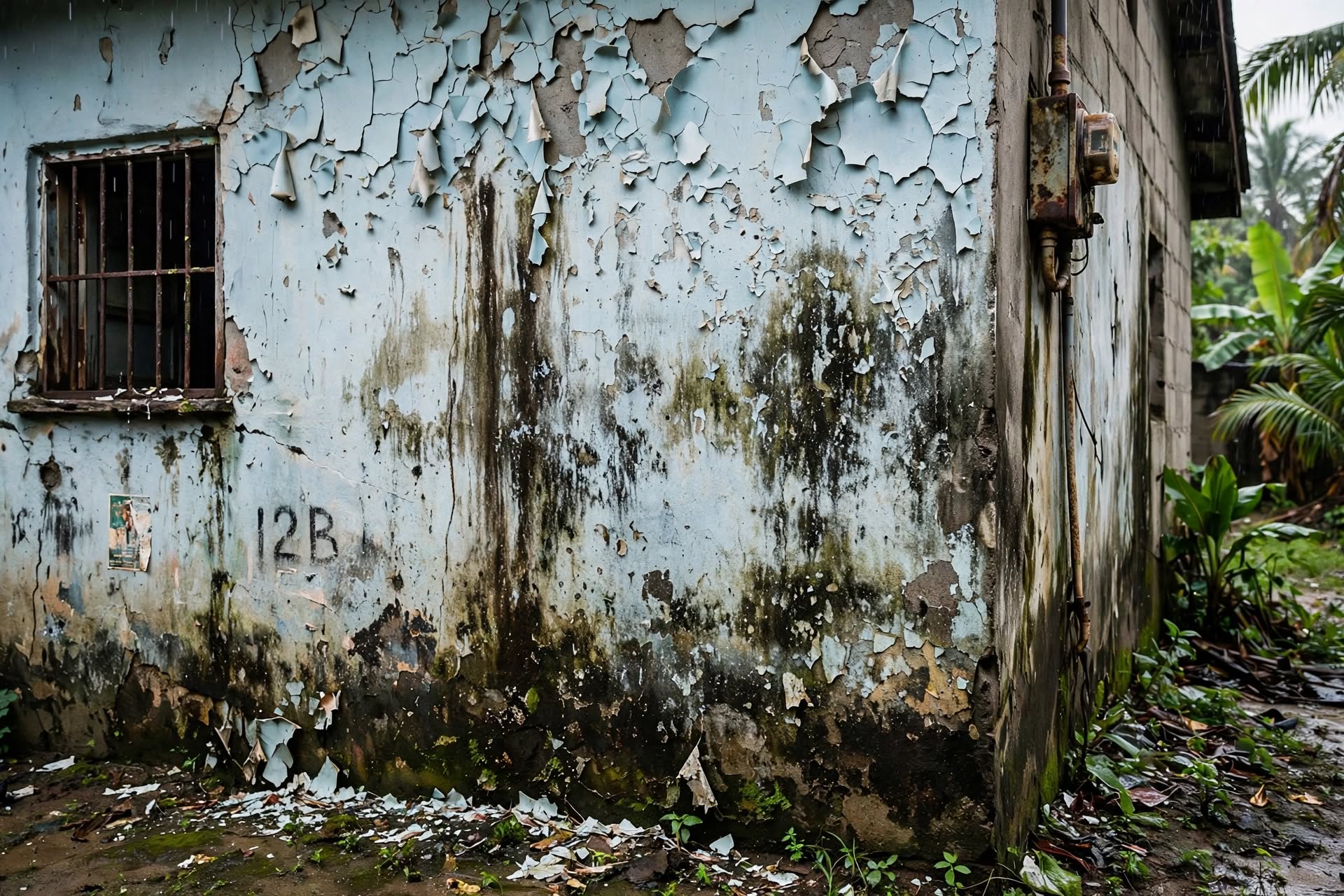
Many Nigerian property owners notice problems with their walls during or after the rainy season.
This is not surprising.
Heavy rainfall can expose weaknesses in exterior walls, roofs, drainage systems, windows and waterproofing. If water finds its way into a wall, the resulting dampness can affect the paint coating.
Exterior walls are particularly vulnerable because they are directly exposed to:
- Rain
- Sunlight
- Temperature changes
- Humidity
- Dust
- Wind
- Atmospheric pollutants
When exterior paint is not suitable for the environment or the wall was not properly prepared, these factors can accelerate deterioration.
However, the rainy season itself does not automatically mean that paint should peel.
A properly prepared surface, appropriate coating system and correct application can significantly improve the durability and appearance of painted walls.
Painting a Damp Wall: One of the Biggest Mistakes
One of the most common mistakes people make when repainting a wall is painting over dampness.
A wall may look acceptable on the surface, but if moisture remains underneath, painting over it can hide the problem temporarily rather than solve it.
Eventually, the moisture may affect the new coating.
You may begin to see:
- Bubbling
- Blistering
- Flaking
- Cracking
- Discolouration
- Peeling
- Damp patches
- Mould growth
Before painting a wall that has experienced dampness, it is important to identify and address the source of the moisture.
For example, the cause could be:
A leaking pipe:
A plumbing problem may be allowing water to enter the wall.
Roof leakage:
Water from a damaged roof can cause persistent dampness around ceilings and upper walls.
Rainwater penetration:
Exterior walls may absorb water where cracks, damaged finishes or inadequate protection exist.
Poor drainage:
Water accumulating around a building can contribute to moisture problems.
Condensation:
Poor ventilation can cause moisture to accumulate inside rooms.
Rising damp:
Moisture can sometimes move upward through building materials from the ground.
Until the moisture problem is addressed, repainting alone may not provide a permanent solution.
Why New Paint Can Peel From an Old Paint Layer
Not every peeling problem starts with the new paint.
Sometimes, the old coating underneath is already weak.
If new paint is applied over an old layer that is flaking, chalking, dusty or poorly bonded, the new paint is essentially depending on a weak foundation.
Eventually, the old layer can detach from the wall—and the new paint may come off with it.
This is why proper preparation is essential before repainting.
The wall should be inspected carefully to identify areas where the existing coating is:
- Loose
- Cracked
- Flaking
- Chalking
- Bubbling
- Dirty
- Damp
- Contaminated
Loose paint should be removed and the surface properly prepared before a new coating is applied.
Poor Wall Preparation Can Cause Paint to Peel
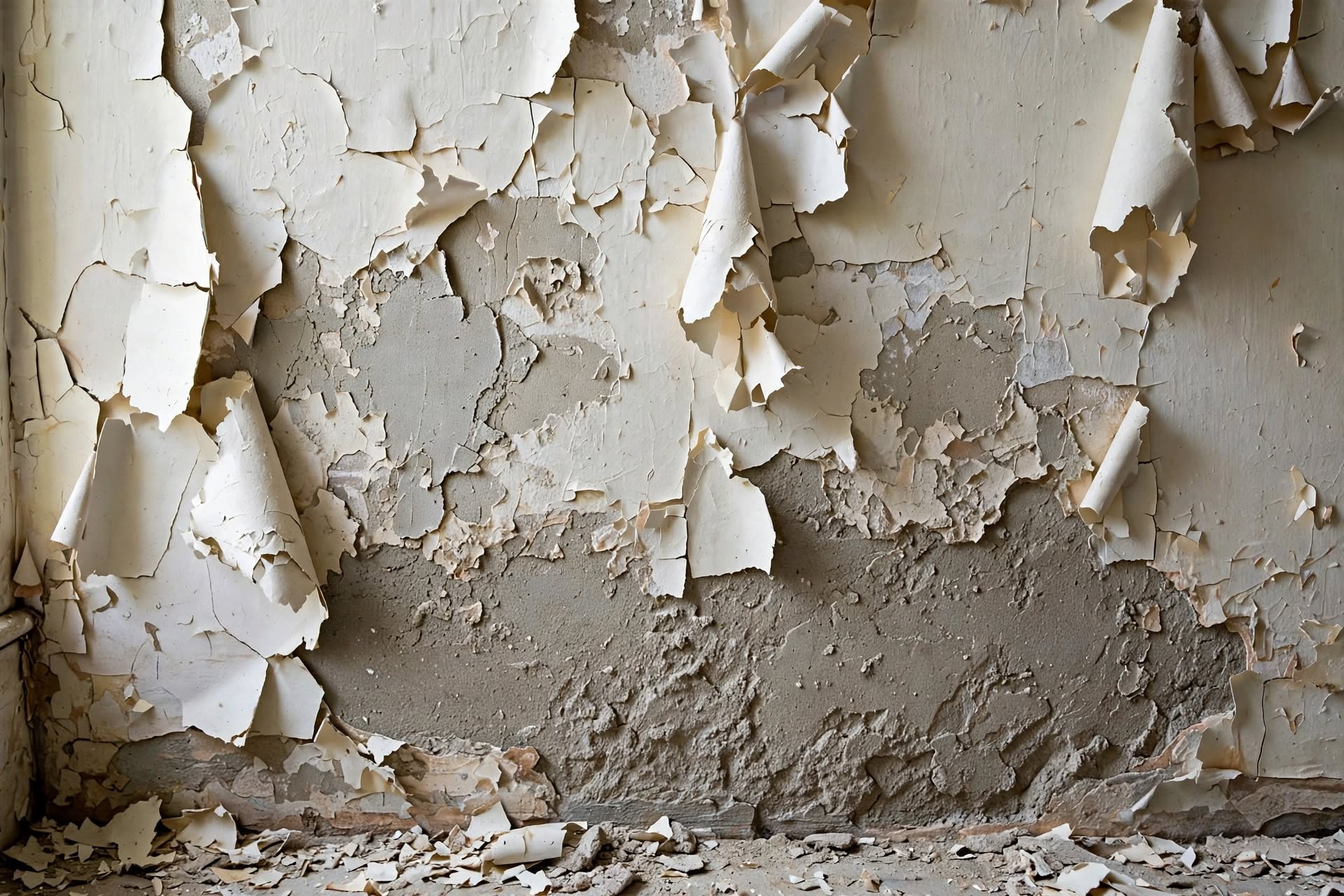
One of the most overlooked factors affecting paint durability is surface preparation.
People often focus heavily on the brand and colour of paint while paying less attention to what happens before the paint reaches the wall.
But even good paint can struggle if it is applied to a poorly prepared surface.
Before painting, the surface should be appropriately prepared for the coating being used.
Depending on the condition of the wall, preparation may involve:
- Cleaning the surface
- Removing loose or peeling paint
- Repairing cracks
- Filling holes and imperfections
- Addressing dampness
- Allowing surfaces to dry properly
- Sanding where appropriate
- Removing dust
- Applying the appropriate primer or undercoat where required
- Applying the finishing coats correctly
The exact preparation process will depend on the wall, existing coating and type of paint being applied.
Dust and Dirt Can Affect Paint Adhesion
Nigerian environments can be dusty, especially during dry periods.
Dust, dirt, grease and other contaminants can sit on walls and prevent paint from making proper contact with the surface.
Imagine trying to attach something securely to a dusty surface.
The dust becomes a barrier between the two surfaces.
The same principle applies to painting.
If a wall is dirty and the contamination is not properly addressed, the paint may have difficulty forming a strong bond with the substrate.
This is one reason why cleaning and preparing the wall before painting matters.
Painting a Newly Plastered Wall
Another common question is:
How long should you wait before painting a newly plastered wall?
There is no single answer that applies to every project because drying and curing depend on factors such as the materials used, thickness, weather conditions, ventilation and moisture levels.
The important principle is simple:
Do not rush the painting process.
New plaster or cement-based surfaces can contain considerable moisture. Painting before the surface is sufficiently ready can create problems with adhesion and coating performance.
In a humid environment, drying can take longer than expected.
A wall that appears dry may still contain moisture internally.
Proper assessment and preparation are therefore important before applying the final decorative coating.
Can Cheap Paint Cause Peeling?
The price of paint is not the only factor that determines whether a wall will peel.
However, paint quality matters.
Paint is a protective and decorative coating, and its performance depends on the formulation, raw materials, application and conditions in which it is used.
Extremely low-cost paint may be formulated differently from premium coatings and may not deliver the same level of durability, coverage, colour retention or resistance to environmental conditions.
That does not mean that every expensive paint is automatically better or that every affordable paint will peel.
The smarter approach is to consider the quality and suitability of the paint for the specific project and environment.
When choosing wall paint in Nigeria, consider factors such as:
- Durability
- Coverage
- Washability
- Moisture resistance
- Colour retention
- Surface compatibility
- Interior or exterior use
- Expected traffic
- Application requirements
- Manufacturer specifications
Why Some Paints Last Longer Than Others
Paint performance is influenced by several factors.
A high-quality coating is designed to form a durable film that can withstand the conditions for which it was formulated.
But paint does not work alone.
The final result depends on the combination of:
Paint quality + surface preparation + application + environmental conditions + maintenance
If one part of the system is neglected, performance can suffer.
For example, a high-quality paint applied to a wet, dirty or unstable wall may still fail.
Similarly, a properly prepared wall can still produce disappointing results if the wrong coating is selected for the intended application.
This is why professional painting should be approached as a complete system rather than simply buying a colour and putting it on the wall.
How to Prevent Paint From Peeling in Nigeria
If you want your walls to maintain a clean and attractive finish for longer, prevention should begin before the first coat of paint is applied.
1. Fix moisture problems first
Never use paint as a substitute for solving a water problem.
If there is a leaking pipe, roof leak, water penetration or persistent dampness, address the source before repainting.
2. Prepare the surface properly
Remove loose paint, clean the surface and repair imperfections before applying new coatings.
3. Allow new walls to dry adequately
Do not rush freshly plastered surfaces.
Give the substrate appropriate time to dry and cure based on the materials and project conditions.
4. Choose the right paint
Different surfaces and environments require different coating solutions.
Interior walls, exterior walls, high-traffic areas and moisture-prone spaces should not necessarily be treated in exactly the same way.
5. Follow application instructions
Paint manufacturers provide recommended application procedures for a reason.
Pay attention to:
- Recommended number of coats
- Recoating intervals
- Surface preparation
- Thinning requirements
- Application method
- Drying conditions
6. Ensure adequate ventilation
Good airflow can help with drying and reduce excessive moisture accumulation indoors.
This is especially important in areas such as kitchens and bathrooms.
7. Do not paint during unsuitable conditions
Extreme moisture, rain or other unfavourable conditions can interfere with application and drying, particularly for exterior projects.
Painting professionals should assess the weather and surface conditions before beginning an exterior painting project.
How to Know If Your Wall Has a Moisture Problem
Sometimes peeling paint is the first visible sign of a deeper issue.
Look out for:
- Dark or discoloured patches
- Paint bubbles
- Persistent dampness
- Musty odour
- Mould or mildew
- White powdery deposits
- Cracking
- Repeated peeling in the same location
- Dampness around windows
- Dampness near bathrooms or kitchens
- Peeling around ceilings
- Paint deterioration after heavy rainfall
If the same section of wall keeps peeling after repainting, do not simply keep adding new layers.
Investigate the underlying cause, Repeatedly repainting a wall without solving the moisture or substrate problem can become an expensive cycle.
Interior Paint vs Exterior Paint in Nigeria
Another important consideration is whether you are painting an interior or exterior surface. Interior walls are protected from direct exposure to rain and intense outdoor conditions, although they can still experience humidity, condensation, stains and daily wear.
Exterior walls face much more demanding conditions.
They may be exposed to:
- Direct sunlight
- Rainfall
- Humidity
- Heat
- Dust
- Wind
- Temperature fluctuations
This means the coating selected for exterior applications needs to be appropriate for those conditions.
Using an unsuitable paint simply because it is available can affect the lifespan and appearance of the finish.
Why Paint Blisters and Bubbles Before Peeling
Peeling does not always start with visible flaking.
Sometimes, you may notice small bubbles or raised areas on the wall.
These are commonly referred to as blistering.
Blistering can occur when something causes the paint film to lose adhesion and separate from the underlying surface.
Moisture and heat are among the factors that can contribute to this problem.
As the coating separates, the affected areas may eventually crack and peel away.
If you notice bubbles on your painted wall, it is better to investigate the cause rather than simply puncturing the bubbles and painting over them.
What Is the Difference Between Cracking, Flaking and Peeling Paint?
These problems are related but are not exactly the same.
Cracking
Cracking occurs when visible lines or splits develop in the paint film or underlying surface.
Flaking
Flaking occurs when pieces of the coating begin to break away from the surface.
Peeling
Peeling occurs when the paint film lifts away from the surface, sometimes in large sheets or sections.
Blistering
Blistering occurs when bubbles or raised areas form beneath the coating. The appropriate solution depends on what is causing the problem.
Does Repainting Over Peeling Paint Work?
Generally, simply painting directly over peeling paint is not a good long-term solution. If the existing paint is already loose, the new coating has no stable foundation.
The new paint may initially make the wall look better, but the underlying loose coating can continue to deteriorate.
Eventually, the new layer may peel along with the old one.
A better approach is to:
Identify the cause → remove unstable material → prepare the surface → treat the underlying problem → apply the appropriate coating system.
This may take more time initially, but it can help produce a more durable finish.
Choosing the Best Wall Paint for Nigeria's Climate
When people search for the best paint for Nigeria's humid climate, they often focus only on the brand name.
A better question is:
What paint and application system is suitable for the specific surface, environment and conditions?
For Nigerian properties, especially in humid areas, consider paint that is designed with durability and the intended application environment in mind.
You should also consider:
- The location of the property
- Whether the wall is interior or exterior
- Exposure to rain
- Moisture levels
- Expected traffic
- Cleaning requirements
- Desired finish
- Surface condition
- Application method
A paint professional can also help determine the most suitable coating system for your particular project.
Why Proper Paint Application Matters
Even excellent paint can perform poorly when applied incorrectly.
Common application mistakes include:
- Applying paint too thickly
- Applying it too thinly
- Recoating too soon
- Painting over damp surfaces
- Using dirty tools
- Failing to prepare the substrate
- Using the wrong primer
- Painting under unsuitable weather conditions
- Incorrect thinning
- Failing to remove loose previous coatings
The painter's technique matters.
This is why large painting projects should not be treated as a simple DIY exercise where appropriate professional support is unavailable.
The goal is not merely to make the wall look good on the day it is painted.
The goal is to achieve a finish that continues to perform after exposure to everyday Nigerian conditions.
How to Make Your Paint Last Longer
There are several practical steps property owners can take to extend the life of their painted surfaces.
Keep walls clean
Dust and dirt can affect the appearance of paint over time. Clean surfaces appropriately without using methods that could damage the coating.
Address leaks quickly
Do not allow a small plumbing or roofing leak to become a major wall problem.
Maintain ventilation
Good airflow can help manage indoor moisture.
Inspect exterior walls
Look for cracks, water stains, peeling areas and other signs of deterioration.
Use appropriate coatings
Select paint based on the intended environment rather than choosing solely based on colour or price.
Work with experienced painters
Proper preparation and application can have a major effect on the final result.
The Bottom Line: Peeling Paint Is Often More Than a Paint Problem
When paint peels in Nigeria, it is tempting to blame the paint immediately.
But the reality is more complicated.
Humidity can contribute to paint deterioration, but other factors, including moisture inside the wall, poor preparation, weak surfaces, water leaks, unsuitable coatings and incorrect application can also play significant roles.
The best way to reduce the risk of peeling is to approach painting as a complete process.
Prepare the wall properly.
Solve moisture problems.
Choose a suitable coating.
Apply it correctly.
Give it enough time to dry.
Maintain the surface.
When these factors come together, you have a much better chance of achieving a beautiful and durable finish.
Looking for Durable Paint for Nigerian Homes and Buildings?
If you are looking for a paint brand that understands the demands of painting in Nigeria, Nexgen Paint offers a range of coatings designed with African conditions in mind.
Nexgen Paint has been operating since 2019 and offers solutions for residential, commercial and professional painting projects. Its products are designed and engineered with consideration for the African climate, providing options for different surfaces, finishes and applications.
From emulsion paints and premium satin finishes to exterior coatings and other specialized paint solutions, Nexgen Paint gives property owners, contractors, developers, painters and building professionals options for achieving a quality finish.
Nexgen Paint also offers professional painting workmanship, making it possible for customers who need more than just paint to get support with their painting projects.
Whether you are building a new property, renovating your home, preparing a commercial space or simply tired of repainting the same walls because of poor durability, choosing the right paint and application process can make a significant difference.
Choose Nexgen Paint for Your Next Painting Project
A beautiful wall should not only look good immediately after painting. It should be able to maintain its appearance and performance as you live, work and build in Nigeria's demanding climate.
For product enquiries, painting projects, distributor opportunities or more information:
Prepare smarter. Finish better. Choose Nexgen Paint.
Visit : www.nexgenpaint.com or call +234 906 796 6435 to order premium paint.
Also read > The Reason Your Floor Paint Peels, Cracks, or Fades Too Fast